Relocating to another country is a significant undertaking. Relocating with your pet adds an entirely different layer of complexity – one that most people only discover once they start researching the process.
Whether you are moving from London to New York, San Francisco to Paris, or anywhere in between, international pet relocation requires careful planning, precise documentation, and an understanding of the rules that govern each destination. Get it wrong, and you could face delays, quarantine, or your dog being refused entry altogether.
This guide covers what you need to know – and how to make the process as smooth as possible for both you and your companion.
Understanding the documentation
Every country has its own import requirements for pets, and these vary significantly. Travelling from the UK to the United States, for example, requires a valid rabies vaccination certificate, tapeworm treatment and a pet health certificate issued within a 10 days before departure; this must also be completed by a USDA-accredited vet.
Other common requirements include microchip verification, fit-to-fly forms and destination-specific import permits.
The challenge is not just gathering the paperwork. It is making sure everything is completed in the correct order, within the correct timeframes, and endorsed by the correct bodies. A missed deadline or an incorrectly completed form can set the entire process back by weeks.
Cargo hold vs in-cabin travel
For most commercial airlines, dogs travelling internationally are placed in the cargo hold in a crate. While airlines have protocols in place, the reality is that your dog will spend hours in a pressurised but isolated compartment, separated from you entirely. For many owners – particularly those with anxious, elderly, or brachycephalic breeds – in our eyes, this simply is not an acceptable option.
In-cabin travel on commercial airlines is typically restricted to very small dogs that can fit in an approved carrier under the seat. For larger breeds, the options have historically been limited to cargo or specialist pet transport services.
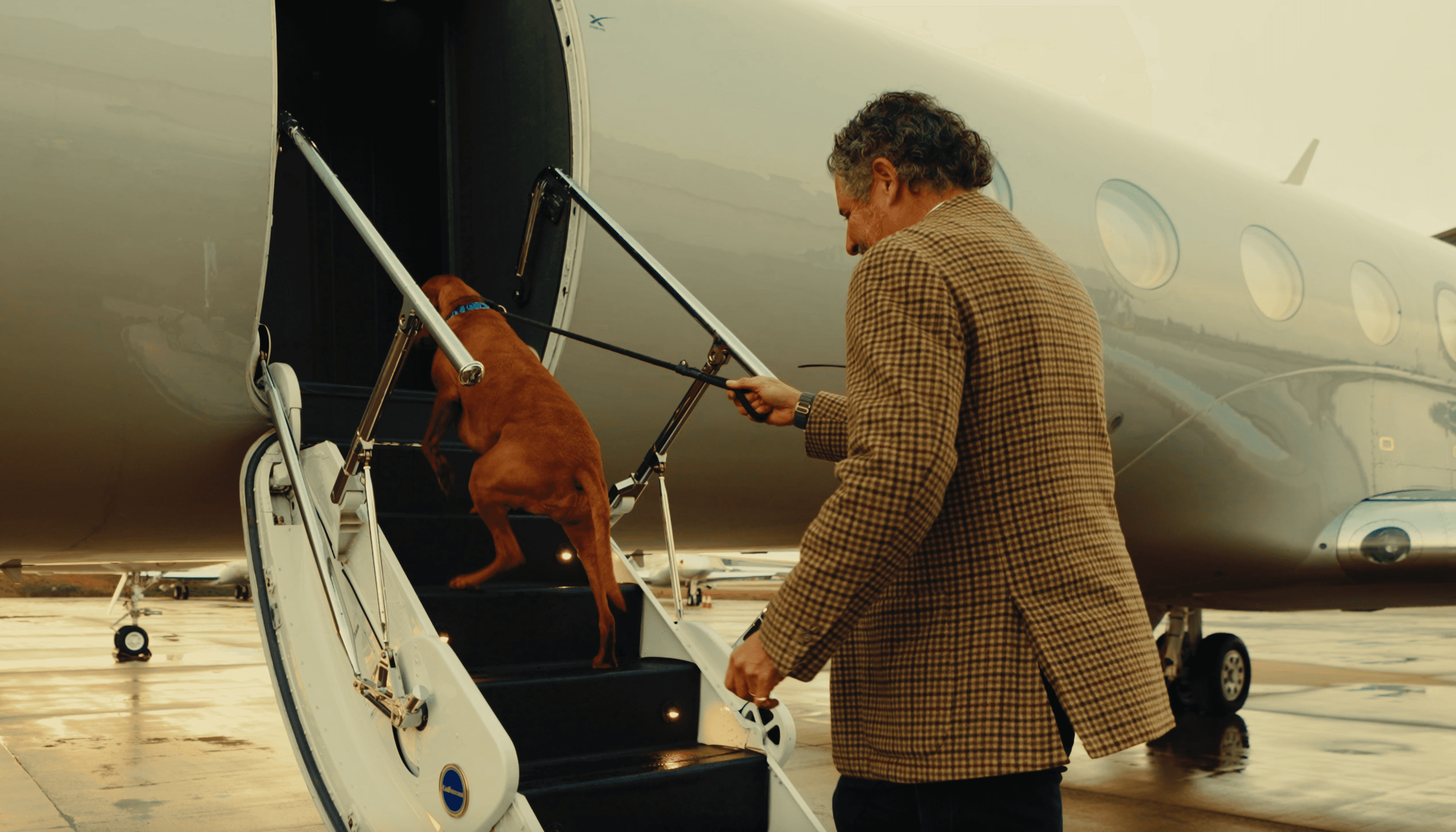
Private pet aviation offers an alternative. Services like Vicuna Air allow dogs of all sizes to fly in the cabin beside their owner, removing the need for a cargo hold entirely. For owners relocating internationally, this can be the difference between a stressful ordeal and a calm, comfortable journey.
Planning the timeline
International pet relocation is not something you can arrange at the last minute. Depending on your destination, the documentation process alone can take anywhere from a few weeks to several months. Rabies titre tests, for instance, require a blood sample to be sent to an approved laboratory, with results taking up to two weeks. Some countries require a waiting period after vaccination before travel is permitted.
A good rule of thumb is to begin the process at least three months before your intended departure date. This gives you enough time to complete vaccinations, obtain health certificates, arrange endorsements, and handle any unexpected complications.
How Vicuna Air can help
At Vicuna Air, we understand that international pet relocation is about more than just a flight. Our service includes complete documentation guidance every step of the way.
Combined with chauffeured ground transportation and in-cabin travel on our Gulfstream GV, the entire process is managed from door to door. No cargo holds. No separation. No compromise.
If you are planning an international move with your dog, we would love to hear from you. Visit our routes page to see where we fly, or get in touch with our team to discuss your journey.